Tuesday, 15 January 2013

Why I Love House Music Part Three:After Hours, The Journey Continues

HOUSE, A NEW MILLENNIUM AND THE JOURNEY CONTINUES


In the last blog "Why I Love House Music Part Two:The Start Of My House Music Journey" we covered my transition from Hip Hop to House Music, Hip House being the bridge between genres, a bit of the history of hip hop and hip house, the Warehouse Scene's origins, influences, the Toronto Warehouse Scene, the (Toronto) Style, the music and a few of the players (JMK) that helped transition from Toronto Warehouse to after hours (note*After hours and Rave are not the same, After Hours Club admittance has a 19 year old photo ID requirement while Raves were commonly all ages)


CHANGES/TRANSITIONS

Back in the mid 90s, House music underwent a substantial transformation. The soulful, mellow vocals that accompanied the hard beats, slow and concentrated dissonant melodies, and the smooth, stylish demeanour gave way to Electro music (electro and techno) largely featuring industrial and psychedelic sounds. Techno sometimes crossed boundaries with house music, giving birth to the genres trance, acid techno, popularized as Rave music.

The genre "Rave", also known as 1980s Hardcore by ravers, first appeared amongst the acid house movement in Scotland during the mid-1980s as a reaction to New Beat, a term first used in the USA during the early '80s. At the time, this New Beat music was a contemporary genre to techno from Detroit and house from Chicago. The Americans at the time used the term to describe those music styles that they never heard before. It was the new beat of the time, the new sound, very different from Hi-NRG disco, New Wave, synthpop, and rap.

The term was soon replaced by other terms, so virtually any U.S. hit once described as "New Beat" are today considered a part of another music style, most of the time simply house or techno. While New Beat usually borrowed an aggressive industrial sound, rave tended to borrow New Beat's elements that were harder than acid house while retaining the neutral mooded sound of acid house.

Rave tended to be a "happy" genre that favoured synthesized melodies over the duller sound in order to attract a wider audience. The genre was later reestablished as "oldskool" hardcore, leading to newer forms of rave music such as drum and bass, jazzstep, and Dubstep as well as other hardcore techno genres, such as gabber, happy hardcore and hardstyle.

In Britain, further experiments in the genre boosted its appeal. House and rave clubs like Lakota, Cream emerged across Britain, hosting house and dance scene events. The 'chilling out' concept developed in Britain with ambient house albums such as The KLF's "Chill Out" and "Analogue Bubblebath" by Aphex Twin. The Godskitchen superclub brand also began in the midst of the early 90's rave scene. After initially hosting small nights in Cambridge and Northampton, the associated events scaled up in Milton Keynes, Birmingham and Leeds (bringing with it a host of issues mainly the spotlight)


In New York, new indie dance bands such as Deee-Lite furthered house's international influence. They were a quirky, nerdy cool trio with an undergroundish voice dying to be heard by mainstreamers. Within the House Nation itself, acceptance for those helping shine light on the cause was broad. Two distinctive tracks from this era were the Orb's "Little Fluffy Clouds" (with a distinctive vocal sample from Rickie Lee Jones) and the Happy Mondays' "Wrote for Luck" ("WFL") which was transformed into a dance hit by Vince Clarke.


CROSSOVER INTO MAINSTREAM


By the early 90s, groups like C&C Music Factory, Deelite, KLF, Black Box and artists such as Crystal Waters and Madonna took house into the Billboard Top 40 with the rise in popularity in the UK with illegal Rave parties. Between police and Government crackdowns, participants of Rave culture fought back with demonstrations, rallies, and continued attendance of illegal parties.

Meanwhile raves both illegal and commercial sprouted on the east and west coasts – an escalation that climaxed with 1993's Rave America, which drew 17,000 to the Californian amusement park Knots Berry Farm.

In North America, the rave scene (supposedly) came to a lull (commercially) until the electronica buzz of 1997, when MTV threw its weight behind the Prodigy, the Chemical Brothers, and Underworld. In the immediate years that followed, Fatboy Slim and Moby achieved ubiquity in TV commercials and movie soundtracks, while trance music of the fluffy Paul van Dyk/Paul Oakenfold type spurred a resurgence of raves in southern California, which by the turn of the millennium reached the 20-40,000 range.


THE TORONTO AFTER HOURS/RAVE SCENE


1994 was the first (and last) time my "Warehouse" friends and I attended a rave together. In all honesty it quite happened by accident. We were out looking for a Warehouse Jam (not realizing they had become all but extinct since the previous summer) and somehow ended up in a darkened, underground parking garage garage somewhere on King St (I hink) set up with flashing lights, club speakers (we didn't even know where the Dj booth was) and was populated almost entirely with underage kids.

Aside from the weird vibe and the age range, the first thing we noticed (wearing straight leg or flared dress pants and a button down dress shirt sporting the more mature look) is that we were massively overdressed (in comparison to most of the kids who if not wearing T shirts and jeans, tank tops and jogging pants they were actually in costume)


It literally felt like we had stepped through a porthole and had been transported to a bizarro world. Needless to say, we didn't stay very long. I wouldn't come to understand what it was we happened into until a few years later.


AFTER HOURS


In the late 90′s, through the support and efforts of several key figures, the House Music scene in Toronto grew to become one of the biggest and most renowned music scenes in the world (I had met several famous and not so famous American celebrities who all confirmed what most in the know already knew... Toronto was the After Hours Capitol of North America... at the time) attracting the biggest names in Dj and House music production (Carl Cox, Paul Oakenfold ect.) But that was then. You see, despite the fact that the After Hours/Rave scene had major corporate and commercial sponsorship (Ever hear of Citrus? It was an event held at... wait for it... wait for it...


that's right... the Ontario Science Centre) As a matter of fact, events were held at nearly every one of the pavilions at the CNE, including the Automotive building, the Direct Energy Centre Building, and Ontario place (that's right, Raves took place in places now reserved for auto shows, home and garden shows ect. lol) there was even one that purportedly took place at the CN Tower, Toronto's most recognized landmark (are we getting a clearer picture of the kind of support the rave community obviously had before the year 2000?)

While other cities have managed to maintain vibrant Dance Music cultures, Toronto’s was doomed to fall, and did so swiftly after the turn of the millennium. So what happened you ask? Kids happened. Underage, irresponsible teenagers with no sense of control or grasp of the concept of consequences happened. You see, at normal after hours venues (like Warehouse Jams) you had to be of age (19) and present ID.

Adults who generally frequented after hours tended to be cautious with illegal substances, and at least informed about the effects and how to counter (staying hydrated by drinking lots of water) And adults generally had at least one "veteran" that could "reign in" those less careful (it was in fact the illegal events with no "of age" requirement that drew negative attention)

By 1999, Toronto’s Rave scene was getting a lot of media attention, but in general, raves generated a very positive atmosphere and good news is no news so there wasn’t very much for major media moguls to write about. In October of 1999, Hullabaloo! (Toronto’s most celebrated and world renowned Rave promotion company) threw an event in an underground parking garage.  It was enjoyed by most of the thousands who attended and would have been a great success if not for a 20 year old University student who overdosed on Ecstasy.

The story his body was discovered during the party leaked to the press and making an example of Ho and painting a picture of Raves as dangerous drug feasts and a threat to youths (I recall the same concerns about Hip Hop music being a threat to youths in the mid 80s)

Accusations made against Toronto’s support of dangerous rave parties, brought to attention that major events had been actually thrown on city property (with city administrators in complete ignorance of the fact?) The campaign against the Rave scene lead to the inacting of a law banning electronic music from being performed after 3am, inciting an uproar amongst the many businesses that benefited from the city’s Rave culture. In the beginning, Raves were largely attended by older, experienced party goers that were sick of night clubs and looking for a more fulfilling experience. By Raves being exposed  to the mainstream (with a lot of the exposure being negative media coverage in the UK) they began to attract younger and younger crowds

 (tell a kid not to do something or go somewhere and guess what they'll do) and because the events were all ages, they were able to attend. As the majority of attendees got younger, the older ravers stopped going. With the Rave scene now dominated by adolescents, it began to face the issues that always follow teenagers, mainly irresponsible drug use, which leads to irresponsible drug dealing, which so often leads to gang violence. The mass exposition of Rave culture also brought it to the attention of the wrong kinds of people (those who go out with the intention of partying irresponsibly)
I can even recall a weekly late night show focusing on Toronto night life over ten years ago,  the interviewer was asking why attendees love the (commercialized) After Hours scene, one response was "it's great, the chicks are all high and much easier to hit on" With the people I partied with (back in the day) the first and most important aspect of partying at an After Hours was the music (in those days, the majority of attendees knew who the guest/headlining Dj was, these days most don't even know the resident Dj)
 In a scene based around tolerance and personal freedom, there was little anyone was willing to do against these negative activities. Thus, its downfall (in it's original form) was inevitable. The clubs most popular in the After Hours Scene were forced to close down due to new noise and other restrictions.

Imagine the positive effects of House Music on virtually everything mainstream being undone, the next time you hear a four on the floor beat behind the average hard or soft sell commercial (car or beer) latest TV show or feature film score then imagine still being stuck in the 70s (musically) For your viewing pleasure, an example of just how much of a threat to the youth House Music turned out to be.


you can also follow me on
https://www.facebook.com/Shell?ref=stream#!/alex.pink.921
http://www.youtube.com/user/kniPxelA?feature=mhee
http://www.reddit.com/user/alex6pink/

https://plus.google.com/u/0/


Friday, 11 January 2013

Why I Love House Music Part Two:The Start Of My House Music Journey

I LOVE HOUSE MUSIC AND ALWAYS WILL


In my previous post I Love House Music Part One:History Of House Music I covered a bit about the origins of House Music, the players (Djs, Artists, Producers) and a brief time line of the genre's humble beginnings to it's worldwide explosion, in this post I'll discuss my own personal experiences and why I'll always love House Music (following a few more background details) But before we get 'er going I would like to say one thing, this isn't a post condemning (present day) hip hop, but like older Reggae (70s) I will always have love for the hip hop of the 80s to mid 90s era. This is just my PG 13 rated, semi biographical journey from Hip Hop culture into the House Nation.

At first, the journey wasn't an easy one (hip hop has generally been a more aggressive form of popular music and great for unpredictable teens with raging hormones) having been into rap since first hearing the Sugarhill Gang's "Rappers Delight" in the mid 70s, listening to the great pioneer Rappers like Kurtis Blow and Grandmaster Flash before I was even a teenager, and having been a breaker in the early 80s, hip hop used to speak to me, for me, and for the Black community. Before hip hop went mainstream, it provided a platform to communicate the feelings on the numerous issues the Black community continues to face (poverty, oppression, bigotry, underemployment, mis-education, gun violence) it had a message. Today... not so much.
R.I.P. HIP HOP

On a personal note, I left hip hop behind due to the rise in popularity of gangster rap in the 90s, then the whole engineered East Coast vs. West Coast "rivalry" thing was pretty much the final nail. Perhaps listening to more music (House) that was predominantly centred around promoting love and  unity, presenting a positive (party) vibe and a hopeful look at a brighter future made gangster rap unpalatable (or perhaps I had just outgrown hip hop all together)

But during the transition period (in 88, 89) it was in fact Hip House that helped my love of House Music grow and flourish, so let's take The Start Of My House Music Journey there with some relevant info.

WHAT IS/WAS HIP HOP
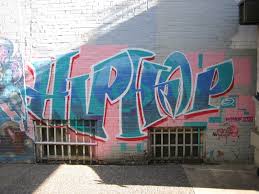

Hip hop is a subculture that originated from an African American community during the 1970s in New York City, specifically in Morris Heights, Bronx (according to wikipedia) then later spread its influence to Latin American communities. While the term is often used to refer to hip hop music, in its broader sense hip hop culture is characterised by the four elements of rapping, DJing, breaking and graffiti.

Hip hop is simultaneously a new and old phenomenon; the importance of sampling to the art form means that much of the culture has revolved around the idea of updating classic recordings, attitudes, and experiences for modern audiences - called "flipping" within the culture. It follows in the footsteps of earlier American musical genres blues, jazz, and rock and roll in having become one of the most practiced genres of music in existence worldwide, and also takes additional inspiration regularly from soul music, funk, and rhythm and blues.

At its best, hip hop has provided an escape from poverty while giving a voice to oppressed and "poverty-stricken" people, particularly in inner cities and neighbourhoods suffering from urban blight, and showcased their artistic ingenuity and talent on a global scale.

At its worst hip hop has mirrored the worst aspects of the mainstream (American) culture that it emerged from: materialism, sexism, an internalized racism, violence, and antipathy towards intellectualism. I got out while the getting was good. No offence to those who still listen, I have a world of respect for true hip hop (which had to go back underground in the face of it's mainstream alter ego) But I just don't have the time or the inclination to try to pick up where I dropped off 20+ years ago. House Music is all I need.

HIP HOUSE TRANSITIONS


Now I'll be honest, when it comes to hip house I can't say I love it today, but it did provide a bridge between what I did like in the early to late 80s (hip hop) and House Music (late 80s to present day) Again, while I grew up listening to my parents disco, funk and Reggae, I didn't feel/appreciate the simplicity of House Music until I, 1) heard it loud over club speakers and 2) saw a girl I was crushing on grooving to it at a school dance. My love truly began with those first dance steps. Where some have been said to feel and be pleasantly overcome by the Spirit in church, I felt the Spirit of House Music out on the dance floor, and it's been with me ever since.

According to wikipedia, Hip House was also known as rap house (although I never heard anyone I knew ever call it that) mixing elements of house music and Hip-Hop, Hip House rose to prominence during the 1980s in Chicago and New York.  In the UK, the first officially credited hip house track was 1987's Rok Da House by UK producers the Beatmasters featuring British female emcees the Cookie Crew. Like hip hop, hip house was not without controversy, with battling claims of who did what first.

In1989 a U.S. record called "Turn Up The Bass" by Tyree Cooper featuring Kool Rock Steady claimed it was the "first hip house record on vinyl." The Beatmasters disputed this, pointing out that "Rok da House" had originally been written and pressed to vinyl in 1986. The outfit responded by releasing "Who’s in the House?" featuring British emcee Merlin, containing the disc "Watch Out, Tyree—we come faster, this is the sound of the true Beatmasters". More claims to the hip-house crown were subsequently laid down in tracks by Fast Eddie, Rob Base with DJ E-Z Rock, and Toni Scott.

Hip-house became popular in nightclubs and garnered substantial chart success. The style complemented sample-based records of the period (sampling was so new there were no official copywrite laws in place to inhibit it's use) produced by artists such as S-Express and Bomb the Bass. Jackstreet Records 1989 Release of "Vitamin-C's" and "The Chicago Way" helped to bring focus to the lyrical prowess of Hip-House rappers.

With production by Reggie R and Dj Bizzy-B, Hip house's further crossover success would attributed to two ground breaking records: "I'll House You" by the Jungle Brothers (an Afrocentric hip-hop group from New York) and "It Takes Two" by Rob Base and DJ E-Z Rock. "I'll House You" is generally seen as a collaboration between New York house-music producer Todd Terry and the Jungle Brothers. "It Takes Two" was described by Hip Hop Connection magazine as "...the first palatable form of hip-house for hardcore hip hop fans (quite possibly true)

Before moving on, I would like to note a few of my favourites not previously mentioned as well as notable maistream crossovers back then, "Come Into My House" - Queen Latifah, "The House that Cee Built" - Big Daddy Kane, "Kicked Out The House" - De La Soul, "Let it Roll" - Doug Lazy, "Now That We Found Love" - Heavy D feat. Aaron Hall, "Git On Up" - Fast Eddie (Feat. Sundance), "The Chubster" - Chub Rock, and "Good Vibrations" - Marky Mark and the Funky Bunch (not one of my personal favourites but he did have notable success enabling him to crossover from artist to actor|)

HOUSE MUSIC AND CLUBBING


Whoa there... hold on a second. Although Industry Nightclub was the epitome, the apex of the 20th century Canadian House Music scene, we still have a little ways to go before we get to the late 90s underground club scene, but to be honest, I just couldn't find a picture of Focus nightclub (it's like it was before the advent of "in the club" picture taking or something) but let's go back to the early 90s and start there...

CLUBBING
Now, my friends and I were not part of the popular crowd by any means, and once we were old enough (17) to want to start clubbing we lacked the confidence to go (to a club named Focus) on the regular night which was Saturday, we decided to start small and go on Fridays (to what was referred to as "white night") simply because it was all but dead (some nights it seemed we were actually the only ones in there, lol)

But then a strange thing happened, the original Focus closed down and reopened at a new location (formerly Club Z) and for some reason, Friday nights became the night to go. By then we were part of the House Nation and as such no longer cared about what others thought or may have had to say about our dance moves, not only because we had sufficient time to build our confidence, but because the environment was such that it didn't really matter. People weren't there to judge, they were there to hear good music and dance.

By the time those of our group who were 18 and 19 had started drinking (mostly to lower our inhibitions with the opposite sex) we were well into the club scene with Focus on Fridays, Basement, RPM or Inner City then Phoenix on Saturday's, Spectrum on long weekend and Caribana Sundays, but what solidified us as being full fledged "Housers" was the after hours "Warehouse scene" of the early to mid 90s.


WAREHOUSE MUSIC

Fingers Inc.


As a reminder, the term "House Music" is said to have originated as a reference to a Chicago nightclub called The Warehouse which existed from 1977 to 1983, and the Toronto Warehouse Scene was a tribute to House Music's pioneer club and the musical style inspiring a new genre. Patrons of the Warehouse scene related to the vibe of Deep house which was known for it's complex melody, hard driving beats, complex chords underlying most sequences, and a soul, ambient, or lounge vibe to the vocals.

Influences of jazz were most frequently brought out by using more complex chords than simple triads which are held for many bars giving compositions a slightly dissonant (temporary, transitional) feel. The use of vocals became more common in deep house than in many other forms of house music. Sonic qualities include soulful vocals, slow and concentrated dissonant melodies, and a smooth and stylish demeanour. Deep House Music rarely reached a climax, but lingered on as a consistent and comfortable relaxing sound.

ORIGIN OF DEEP HOUSE / WAREHOUSE

Deep house was largely pioneered by Larry Heard (Mr. Fingers) of Fingers Inc. with tracks such as "Mystery of Love" and "Can You Feel It?" My favourite Fingers Inc. song was "Distant Planet" with vocals provided by the legendary Robert Owens.  Derrick May's "Strings Of Life" had similar impact on Deep House as it did on Detroit techno. Heard's deep house sound moved house music away from its "posthuman tendencies" (spacey futuristic quality) back towards the "lush" soulful sound of early Disco music.

THE WAREHOUSE JAM


Perhaps the most underground aspect of House Music culture was the Warehouse Scene. The parties (Warehouse Jams) were routinely after hours (12am - 6am) and were rarely at the same venue more than a few times. Due to the illegalities (unlicensed bar, non adherence to capacity and fire code restrictions) you truly had to be "in the know" or know someone "in the know" in order to find the street corner where a promoter would wait in the cold, the rain, or snow to inform patrons of the location for the night (who else but a lover of House would be so dedicated?)

Being "in the know" (where to find the promoters giving directions) it was also important to know which parties to attend (based on which Dj was playing) Back in the day, those in the know put the team of JMK (Jeremy Beckman, Mike Sitchon and Kenny Glasgow) at the top of the list knowing they never disappointed. One week the party would be at a place in and around Kensington Market, the next at Wellington, there was King St, Adelade (23 hop) Queen St, and Mowat St.

In a 2001 article in Now Toronto by Benjamin Boles titled "JMK Bring Back the Warehouse Attitude" the three Djs reflected on what the Warehouse Scene was like regarding the dedication of all (Djs, Promoters, Attendees) to keep the vibe going every week.

"We tried to legitimize as much as we could and in some ways ended up commercializing the whole warehouse scene," said Glasgow, "because we were getting numbers that no one, absolutely no one, was getting."

"Remember Mowat Street?" asks Beckman.

"There were, like, 800 people!" Glasgow exclaims (back then there was rarely more than the two to three hundred people that averaged a night out)

"It was the second week of February," remembers Sitchon, "there was a snowstorm outside and the lineup went on forever."

"I honestly think that was what inspired clubs like Industry," interrupts Beckman.

Part of the anticipation, what made the Warehouse Scene so great was in setting out for the night not knowing where the party was going to be (some nights would be a bust) Sometimes we'd have to go to the "hot spots" (quiet downtown street corners where promoters would give the secret location) Once there, prices would range anywhere from $5 to $25 bucks to get in, there would often be a mobile bar (even smartly set up in a cargo elevator) in case "undercovers" intruded or the spot was raided, some nights the party could go till dawn, some nights we would just arrive and the police would "bust the party" within hours or even minutes.

Funny enough, a "buss up" party wouldn't mean the end of the world, oft times there would actually be a few going on in a single night. And if not there was always "Jonny's Hamburgers" or "The Big Slice" (one of the two places we would end up by the night's end anyway) Regardless, we would be dressed sharp and ready for the next Warehouse adventure the following week. Good times.

WAREHOUSE DEMOGRAPHIC
In the Warehouse Scene was all inclusive (racially, sexually) attendees tended to range in age from early 20s and upwards, and in Toronto they came dressed to impress (leaving behind the straight leg jeans modified with extra material running down the outside legs and the smiley face T shirt)


commonly wearing straight leg or flared dress pants and a patterned (often paisley) button down dress shirt for a more classy (posh) mature look.


With classier dress came a more sophisticated dance style. Leaving behind the jumping "kick slap", voguing and jacking of the late 80s, the Warehouse dancer tended to perform variations of the James Brown, a blend of a Salsa style, foot sliding, tap dance perfected by weeks, months and years of attending Warehouse parties.


HOUSE DANCE STYLE

House dance style has roots in the clubs of Chicago and of New York. The main elements of House dance include Footwork, Jacking, and Lofting. House dance is often improvisational in nature and emphasis on fast and complex foot oriented steps combined with fluid movements in the torso, as well as floor work.

The major source in house dance movement stems directly from the music and the elements within the music such as Jazz, African, Latin, Soul, R&B, Funk, Hip Hop, etc. The other source is the people, the individuals and their characteristics, ethnicities, origin, etc. People from all walks of life partying under one roof provided exchanges of information (via body language) making house dancing a social dance.

*note: the dancing and music forms of Jacking itself were sexually charged in its earliest forms, with couples (often two men or two women) grinding their pelvises together.  "Jacking" music and dance most likely came from the multicultural roots in the early underground Chicago house. Both concepts of Jacking have their origins in various African and types of Latino and Hispanic dance culture, with a fair amount of influence from early European and American disco culture.

(In truth, the same/similar sexually charged form of dance has been present in African, Caribbean and Latin culture for centuries, which is part of what made "Spectrum" Sundays on Caribana long weekend go hand in hand with the House Scene for us)

In house dancing there is an emphasis on the subtle rhythms and riffs of the music with the footwork following closely (the more on-time one was with more than just the heavy beat, the more one's moves and style were noticed, appreciated and even duplicated or modified) making it the main feature that distinguished house dancing from disco dancing and the foot stomping that emerged as the current form of dancing that is done to electronic dance music as part of the rave culture. I recall when taking my friends (who were accustomed to the posh Warehouse Scene) to after hours parties in the 2000s, the lack of "sophisticated"dance style was their first observation. My response, the best and only response was the truth... "that just makes the dance style we have stand out that much more". They tended to agree.

HOUSE MUSIC AND BEING A DJ

My friends and I first developed a love for the art of beat mixing in '88 (possibly because of the influence a Dj could have on a listener) It is hard to explain the profound effect House Music has on those who consider themselves part of the House Nation, to a "Houser" no other music comes close to producing the feelings House does. Housers are part of a global community sharing a love of dance and appreciation of sounds ranging from simple to complex, and today there's every type of House to fit one's taste. Whether you like classical music, jazz, blues, soul, rock, alternative, electro pop, new wave, hard beats, soft beats, hip hop, industrial tech, today the House genre has it all.

Here's an alphabetical list of sub types of House Music within the genre itself, Acid house, Balearic beat, Chicago house, Deep house, Detroit house, Disco house, Diva house/Handbag house, Hardbag, Electroclash, Electro house, Complextro, Brostep, Dutch house, Fidget house, Moombahton, Electro swing, Swing house, Euro house, Freestyle house, French house, Funky house, Garage house, Ghetto house, Hip house, Italo house, Kwaito, Latin house, Microhouse/Minimal house, New beat, Pop house, Progressive house, Tech house, Tribal house and Vocal house (again, this is not including all other sub forms within the Electronica umbrella-that list goes on for days)

Wanting to Dj came from both the love of the genre, and feeling/experiencing the effect a good Dj could have on a party (that and wanting to make our own tapes reflecting our own tase and style)

Beat mixing: Old school vs. New school

Bar Babylon
It was about 88-89 when my friends and I developed a taste for beat mixing, starting off with the least expensive 2 channel mixer Radio Shack had to offer. None of us could afford to even consider asking our parents to spend $1200 of their hard earned money for a pair of Techniques 1200 turntables, so we did our best using regular record players and our fingers to slow down or speed up the music's tempo.

Although we wouldn't have the proper equipment till the mid 90's, we would make the journey to downtown Toronto (mainly Play De Records and Traxx Records) every few weekends and pick up the latest tracks, slowly building our collection until we were ready to do it right.

By the mid 90's, we owned either Techniques 1200's or the Gemini equivalent (which really wasn't) and I didn't have the experience of playing at a club till the year 2000. By then, with a culture which stretched out from Chicago and NYC to London then back again, House music would be transformed.


Coming soon,  I Love House Music Part Three:After Hours, The Journey Continues.

you can also follow me on

https://www.facebook.com/Shell?ref=stream#!/alex.pink.921
http://www.youtube.com/user/kniPxelA?feature=mhee
http://www.reddit.com/user/alex6pink/
alex9pink.tumblr.com
https://plus.google.com/u/0/


Tuesday, 8 January 2013

Why I Love House Music Part One:History Of House Music

I LOVE HOUSE MUSIC


HOW I CAME TO LOVE HOUSE MUSIC


I remember when I first heard it I didn't find it very appealing, actually, despite it's resembelance to Disco... I didn't like it really. I could never have imagined I'd one day be writing a blog on how I Love House Music, but here we are 24 years later and the love is as fresh as always. Before House I was into Hip Hop (back in High School at the time) and that coupled with Funk and R & B was what the majority of "urban" teens listened to. We grew up on our parents formula of James Brown, Earth Wind & Fire, and Donna Summer, most of us can remember the Sugar hill Gang, Kurtis Blow, Grand Master Flash, Afrika Bambaataa and countless more setting the stage for a love of nothing but Hip Hop & R&B.
Growing up in Scarborough and with 680 CFTR being the closest thing to a music station worth listening to... (that I could receive on my little clock radio) it was hard to keep up with the latest Eric B. & Rakim track, and as such 70's and 80's rock was very much impressed upon my music sense (although it was better than listening to nothing, it was kind of like hearing a commercial jingle then having it stuck in your head... for ther rest of your life) and the only time I would get to listen to Funk (now called "Old School") was when I would spend the weekend at my cousins house. I found I could even digest (for the most part) some New Wave, as it did get a lot of airplay, but house music was another story.
Most of us who once found the beat too repetitive, the vocals too short and repetitive, were quickly won over after hearing house music played loud in a club environment (my friends and I anyway) and finding more and more hip hop artists like Chub Rock, Big Daddy Kane, Jungle Brothers and Heavy D popularizing the subgenre Hip House, our love for HouseMusic grew. 

With the circulation of the latest bootleg underground house cassette tapes, regular airplay on one or two College/University Radio stations Saturday nights with Deadly Headly (can't recall the station) and 88.1 CKLN late, late Saturday nights or Sunday afternoons with Djs playing tracks with artists from NYC, Chicago and Detroit laying down soulful and inspiring vocals which blended perfectly with everything else going on in a single track (from classic flute, piano or orchestral instruments, to jazzy guitar or electronic/synthesiser funk-type sound) it became clear House Music was here to stay. 

My love for house music grew after the first dance, and that love was for life with my first radio-edited tape sowing the seeds of my interest in Beat Mixing. 
Twenty five years ago an older gentleman asked what kind of music I listened to. I told him I listened to House Music. He asked "hell's music?" I actually had to air trace the shape of a house for him to comprehend House being a new form of music. Today the average older gentleman may not only know what House Music is (although these days  has been stuffed under the "allmusic" umbrella and is more commonly referred to as electronica in the mainstream) chances are he would know what House music is (actually, chances are just as good he himself is a listener) 

Unlike 25 years ago, House Music in no longer just for the denizens of the  underground. It's in the mainstream, it's global, and it's enhanced nearly all other genres of popular music. There are major events and festivals world wide and Electronica (House) is widely used in commercials, TV shows and Feature films (not bad for a form of music once considered to be nothing more than the latest fad in the decade of one hit wonders)

WHAT IS HOUSE MUSIC?


Origins of the term the term "House Music" is widely cited to have originated as a reference to a Chicago nightclub called The Warehouse, which was patronized primarily by black and Latino men who came to dance to music played by the club's resident DJ Frankie Knuckles.

After the Warehouse closed in 1983, the crowds went to his new club, The Power Plant. Knuckles remarks that the first time he recalls the term "House Music" as applicable to the new form of dance music was upon seeing "we play house music" on a sign in the window of a bar on Chicago's South Side.

South-Side Chicago DJ Leonard "Remix" Roy, in a self-published statement claims he put such a sign in a tavern window because it was where he played music that one might find in one's home (in his case, it referred to his mother's soul & disco records, which he worked into his sets)


Chip E.'s 1985 recording "It's House" may also have helped to define this new form of electronic music. (Chip E. lends credence to the Knuckles association, claiming the name came from methods of labelling records at the Importes Etc. record store, where he worked in the early 1980s) Music Knuckles played at the Warehouse nightclub were labelled in the store "As Heard At The Warehouse", which was shortened to simply "House". Patrons later asked for new music for the bins, which Chip E. implies was a demand the shop tried to meet by stocking newer local club hits.
Regardless of it's true origins, then name "House" went from a regional catch-all term for dance music that was once synonymous with older disco music to a global phenomenon quite in line with digital format.
WHEN AND WHERE DID HOUSE MUSIC BEGIN?
There has been much speculation as to what U.S. City House Music owes it's true origins, but according to some sources, this genre of electronic dance music may have originated in Chicago in the very late 70's (with Knuckles blending of classic disco with "Euro pop"/New Wave at the Warehouse)

New York’s "Paradise Garage", which promoted European music, had broken the barriers of race and sexual preference (for House Music was in part targeted towards the Black and Gay community).
With the Warehouse club being primarily frequented by black and gay people, when Frankie Knuckles was asked by an interviewer "Why do you think that is?" Frankie Knuckles replied "I think there was a lot that the audience could relate to, lyrically. Plus, the artists that did so many of the vocal performances were raised in church. Coupled with the energy, it all just made familiar sense to the crowd."

Regarding the appeal of House Music, the Godfather of House Music went on to say "Like so many things that were born through gay culture, straight people tapped into it, embraced it, and made it their own, thereby crossing it over into the mainstream. Sometimes it isn’t necessary to draw a picture to get someone to understand what it is. Some things that come into this world naturally find their place. House music is one of those things."

Before The Warehouse opened, there had been clubs strictly designed to segregate race. However, The Warehouse did not make any difference between Blacks, Hispanics, or Whites; gay or straight, the main interest was simply the vibe of the music. And the music was as diverse as the clients.

By the early 80's it was clear House Music was the first direct descendant of disco. By comparison House Music was a "deeper", more "raw" sound designed to make people dance (more individually unlike couples in the Disco Days) Disco had already produced the first records to be aimed specifically at DJs with extended 12" versions that included long percussion breaks for mixing purposes.

Songs like The Peech Boys "Don’t Make Me Wait" (a record that has been continually sampled over the last two decades) took things in a different direction with their sparse, synthesised sounds that introduced dub effects and drop-outs that had never been heard before. It was initially popularised circa 1984 in Chicago but quickly fanned out to other major cities such as Boston, Detroit, London, Manchester, Miami, Montreal, Paris and Toronto.

It then began to influence popular music in Europe, with songs such as "House Nation" by House Master Boyz and the Rude Boy Of House (1987) and "Doctorin' The House" by Coldcut (1988) in the pop charts. Since the early to mid-1990s, House Music has been infused in mainstream pop and dance music worldwide (the House "beat" and style has been grafted in the latest version of Euro/Dance genre and is almost indistinguishable to the ear unfamiliar with underground House)

After enjoying significant underground and club-based success in North America from the mid 80's onwards, House Music emerged into the UK mainstream pop market in the mid-to-late 80s. It's popularity quickly followed in the rest of Europe (with the revamp of Euro/Dance) in the early 90's, then it became a global phenomenon from the early-to-mid 90s onwards. With it's use in several films through the mid to late 90's, it proved to be a commercially successful genre and a more mainstream pop-based variation (Trance-Germany) grew increasingly popular in Europe and North America (with a second Eruo revamp more closely mimicking Transe)


WHAT MAKES THE HOUSE SOUND SO POPULAR?

Early House Music was generally dance-based music characterised by repetitive 4/4 beats, rhythms centred around drum machines, off-beat hi-hat cymbals, and synthesized basslines. While House displayed several characteristics similar to Disco music, it was more electronic and minimalistic, and the structured music's focus around a repetitive rhythm seemed more important than the song itself. House music today, while keeping several of these core elements, notably the prominent kick drum on every beat, varies a lot in style and influence, ranging from the soulful and atmospheric deep house to the more minimalistic Tech house, dreamy Trance to bumpy Progressive, making House Music quite possibly the most versatile form of music today.


Electronically generated sounds and samples of recordings from genres such as classical, blues, disco, funk, hip hop, rock, soul and synth pop are often added to the foundation of the drum beat, synth bass line and kick drum. House songs may also include disco, soul, or gospel vocals and additional percussion, accapella and even speaches (ie. Martin Luther King's "I have a Dream" speech or George W. Bush's "We got im" speech) 
Today, House is a more uptempo music for dancing which generally ranges between 120 and 135 bpm (a bit faster compared to the early years of house) The common element of House is still a prominent kick drum on every beat (also known as a four-on-the-floor beat) the kick drum augmented by various kick fills and extended dropouts. The drum track is filled out with hi-hat cymbal-patterns that nearly always include a hi-hat on quaver off-beats between each kick, and a snare drum or clap sound on beats two and four of every bar. In lay terms... House Music, like today's listener has become far more complex and sophisticated.

Artists like Björk, Madonna and Janet Jackson, and groups such as U2 and C&C Music Factory incorporated the genre into their work. Groups like "Inner City" had significant success crossing between underground and mainstream with hits like "Big Fun" and "Do You Love What You Feel". After enjoying significant success in the early to mid-90s, House Music grew even larger during the massively controversial Rave period (1996–2001) also referred to as the second wave of what's now called Progressive house.

The genre has remained popular and fused into other popular sub genres almost too numerous to mention (tech house, tribal house, techno, Garage, Salsa (Latin House) Trance, Progressive, Warehouse, Rotterdam... ect.) House Music remains popular in both clubs and in the mainstream pop scene while still maintaining a strong foothold in underground scenes across the globe.
One of the early anthemic tunes, "Promised Land" by Joe Smooth, was covered and charted within a week by the Style Council. Europeans embraced house and began booking legendary American house DJs to play at the big clubs, such as Ministry of Sound, whose resident, Justin Berkmann brought in Larry Levan.
The House Music scene in Uk cities such as Birmingham and London were also provided with many underground Pirate Radio stations and DJs alike which helped bolster an already contagious music genre that was still relatively ignored by the mainstream. The earliest and influential UK house and techno record labels such as Warp Records and Network Records (otherwise known as Kool Kat records) helped introduce American and later Italian dance music to Britain as well as promoting select UK dance music acts.
But house was also being developed on Ibiza, although no house artists or labels were coming from this tiny island at the time. By the mid-1980s a distinct Balearic mix of house was discernible.

Several clubs like Amnesia with DJ Alfredo were playing a mix of rock, pop, disco and house. These clubs, fueled by their distinctive sound and Ecstasy, began to have an influence on the British scene. By late 1987, DJs like Trevor Fung, Paul Oakenfold and Danny Rampling were bringing the Ibiza sound to UK clubs like the Hacienda in Manchester, and in London clubs such as Shoom in Southwark, Heaven, Future and Spectrum.
In the U.S., the music was being developed to create a more sophisticated sound, moving beyond just drum loops and short samples. In Chicago, Marshall Jefferson had formed the house group Ten City with Byron Burke, Byron Stingily & Herb Lawson. The group was signed by Atlantic Records and released the album Foundation in 1989, which became the group's only album to cross over, peaking at No. 49 on the US Top R&B/Hip-Hop Albums chart.

New York–based performers such as Mateo & Matos and Blaze had slickly produced disco house tracks. In Detroit a proto-techno music sound began to emerge with the recordings of Juan Atkins, Derrick May and Kevin Saunderson.
Tony Wilson, (the manager of the "Factory" nightclub) also promoted acid house culture on his weekly TV show. The Midlands also embraced the late 80's house scene with illegal parties and more legal dance clubs such as The Hummingbird.
HOUSE late 80s–early 90s

Building in New York City where the Paradise Garage nightclub was located back in America the scene had still not progressed beyond a small number of clubs in Chicago, Detroit, and New York. However, many independent Chicago-based record labels were making appearances on the Dance Chart with their releases. In the UK, any house song released by a Chicago-based label was routinely considered a must play at many clubs playing house music.

Paradise Garage in New York City was still a top club. The emergence of Todd Terry, a pioneer of the genre, was important in America. His cover of Class Action's Larry Levan mixed "Weekend" demonstrated the continuum from the underground disco to a new house sound with hip-hop influences evident in the quicker sampling and the more rugged bass-line.
The early 90's additionally saw the rise in mainstream US popularity for house music. Madonna released the house single "Vogue" in 1990, which became an international hit single and topped the US charts and is credited as helping to bring house music mainstream.
Influential gospel/R&B-influenced Aly-us released "Time Passes On" in 1993 (Strictly Rhythm), then later, "Follow Me" which received radio airplay as well as being played in clubs. Another U.S. hit which received radio play was the single "Time for the Perculator" by Cajmere, which became the prototype of ghetto house sub-genre. Cajmere started the Cajual and Relief labels (amongst others). By the early 1990s artists such as Cajmere himself (under that name as well as Green Velvet and as producer for Dajae), DJ Sneak, Glenn Underground and others did many recordings. The 1990s saw new Chicago house artists emerge such as DJ Funk, who operates a Chicago house record label called Dance Mania. Ghetto house and acid house were other house music styles that were also started in Chicago.
WHAT IS ELECTRONICA?


Electronica includes a wide range of contemporary electronic music designed for a wide range of uses, including foreground listening, some forms of dancing, and background music for other activities. Unlike electronic dance music not all examples of electronica are necessarily made for dancing. In the United States genres such as techno, downtempo, and ambient are among those encompassed by the umbrella term, entering the American mainstream from "alternative" or "underground" venues during the late 1990s.
Allmusic categorises electronica as a top-level genre on their main page, where they state that electronica includes danceable grooves to music for headphones and chillout areas.

Electronica has grown to influence mainstream crossover recordings. Electronic sounds  became key to the mainstream pop and rock sounds of the 1980s. Since the adoption of "electronica" in the 1990s to refer to more underground music with an electronic aesthetic, elements of modern electronica have been adopted by many popular artists in mainstream music. Making it more palatable to the mainstream listener.

HOUSE IN THE MAINSTREAM

It is of little doubt the use of "Electronica/Techno/Progressive in films such as Sneakers, Swordfish, Blade and the Matrix did a lot to bring this once unknown and ignored music form into the spot light. Generally speaking, for the purposes of excercise and weight training, House's uptempo 125 -130 bpm is perfect for the serious body shaper. It can be heard in various mid and hard sell commercials trying to tie thei product or service to the high energy and perceived movement the sound of House Music imbibes.

Chicago Mayor Richard M. Daley proclaimed August 10, 2005 to be "House Unity Day" in Chicago, in celebration of the "21st anniversary of house music" (actually the 21st anniversary of the founding of Trax Records, an independent Chicago-based house label). The proclamation recognized Chicago as the original home of house music and that the music's original creators "were inspired by the love of their city, with the dream that someday their music would spread a message of peace and unity throughout the world". DJs such as Frankie Knuckles, Marshall Jefferson, Paul Johnson and Mickey Oliver celebrated the proclamation at the Summer Dance Series, an event organized by Chicago's Department of Cultural Affairs.


August 26th 2004, then State Senator Barack Obama shook the hand of Frankie Knuckles (the Godfather of House Music) and christened the Chicago street where the legendary Warehouse once stood… "Frankie Knuckles Way”, it was almost 30 years since Frankie had put his first record on in that famous nightclub.

It was during the 2000's that became firmly established, both in the underground and as part of the pop market, and labels such as Defected Records, Roule and Om were at the forefront of championing the emerging sound.


 In the mid-2000s, fusion genres such as electro house and fidget house emerged. This fusion is apparent in the crossover of musical styles by artists such as Dennis Ferrer's production style having evolved from the New York soulful house scene and Booka Shade's roots in techno. DJs today can be heard blending all sub-genres of house as many of the best musical elements are shared across these sub-genres. Electro house is still popular in Australia, Europe and North America, where the Electro House scene has produced acts which are popular touring the world e.g. Dirty South, Tommy Trash, The Potbelleez and The Aston Shuffle.
Today, innovative House Music is celebrated and showcased at British Columbia's Shambhala Music Festival and at major industry sponsored events like Miami's Winter Music Conference. House Music can now even be heard in the Middle East in cities such as Dubai & Abu Dhabi on national radio Station Radio 1 “Club Anthems” show presented by Greg Stainer and at events like Creamfields.

Tomorrowland 2012 took place between from July 27–29, 2012, at the De Schorre National Park in Boom, Belgium. The line-up consisted of 400 DJs, such as
TOMORROWLAND 3 DAY FESTIVAL
Skrillex, Avicii, Marco Bailey, Skazi, David Guetta, The Nervo Twins, Hardwell, Swedish House Mafia, Afrojack, Steve Aoki, Carl Cox, The Bloody Beetroots, Paul van Dyk, Martin Solveig, Chuckie, Fatboy Slim and Pendulum playing on fifteen stages each day. 180,000 people from over 75 countries around the world were in attendance, with 35,000 of them staying in Dreamville. Because of the enormous success of Tomorrowland and the fact that it is a Belgian festival, ID&T decided to give Belgians an exclusive chance with a pre-sale (80,000 of the 180,000 tickets) on March 24. In less than one day, all of the tickets sold out and at some moments there were 2,000,000 people on the online waiting list. The worldwide sale started April 7. Within two hours, the other 100,000 tickets sold out. In addition to regular tickets, Tomorrowland partnered with Brussels Airlines to provide exclusive travel packages from over 15 cities around the world. Other highlights of the festival were the Cloud Rider, the highest mobile Ferris wheel in Europe, and the fact that 25 air-flights were organised to bring spectators to the festival.

As of the late 2000s, house influenced music retains widespread popularity in clubs throughout the world. House Music has also seen a comeback into the mainstream with producers like Daft Punk, David Guetta, Stardust, Swedish House Mafia, Deadmau5, Afrojack, Steve Aoki, Avicii, Fedde Le Grand, Benny Benassi, and Dada Life bringing eurodance-infused house tracks back to the US Top 40 charts.
A new generation of house music DJs has experienced a growing fan base from the mid 2000s onwards. Examples of these DJs include but are not limited to Afrojack, Avicii, Axwell, Bingo Players, David Guetta, Deadmau5, Digitalism, Eric Prydz, Kaskade, Laidback Luke, Madeon, Mat Zo, Porter Robinson, Sasha, Steve Aoki, Sebastian Ingrosso, Swedish House Mafia, Tiësto, Hardwell and Wolfgang Gartner. Only, the following is much larger, access more expansive (the House listener today no longer has to drive across town to a record store specializing in DJ Music and Dj Equipment sales/rentals or wait for their friends older brother to return from a trip to NYC with the latest bootleg tape in the bag. Today's House Music listener can get the latest track, from the latest Dj/Producer, and even follow a specific label in seconds or minutes all with the click of the mouse.


Not too shabby for music once considered a fad.


you can also follow me on 

https://www.facebook.com/Shell?ref=stream#!/alex.pink.921
http://www.youtube.com/user/kniPxelA?feature=mhee
http://www.reddit.com/user/alex6pink/
alex9pink.tumblr.com
https://plus.google.com/u/0/